
Your notes should outlive the book you wrote them in
A local-first home for notes, knowledge and long-form thinking.
Bookend combines the freedom of a notebook with the structure of a knowledge base and rich interactive tools. Optional AI is there when you want it.
Your books live on your computer. Your files are yours. Your ideas can keep growing, wherever you choose to take them.
Available now for Mac. iPad and iPhone versions are awaiting App Store approval.
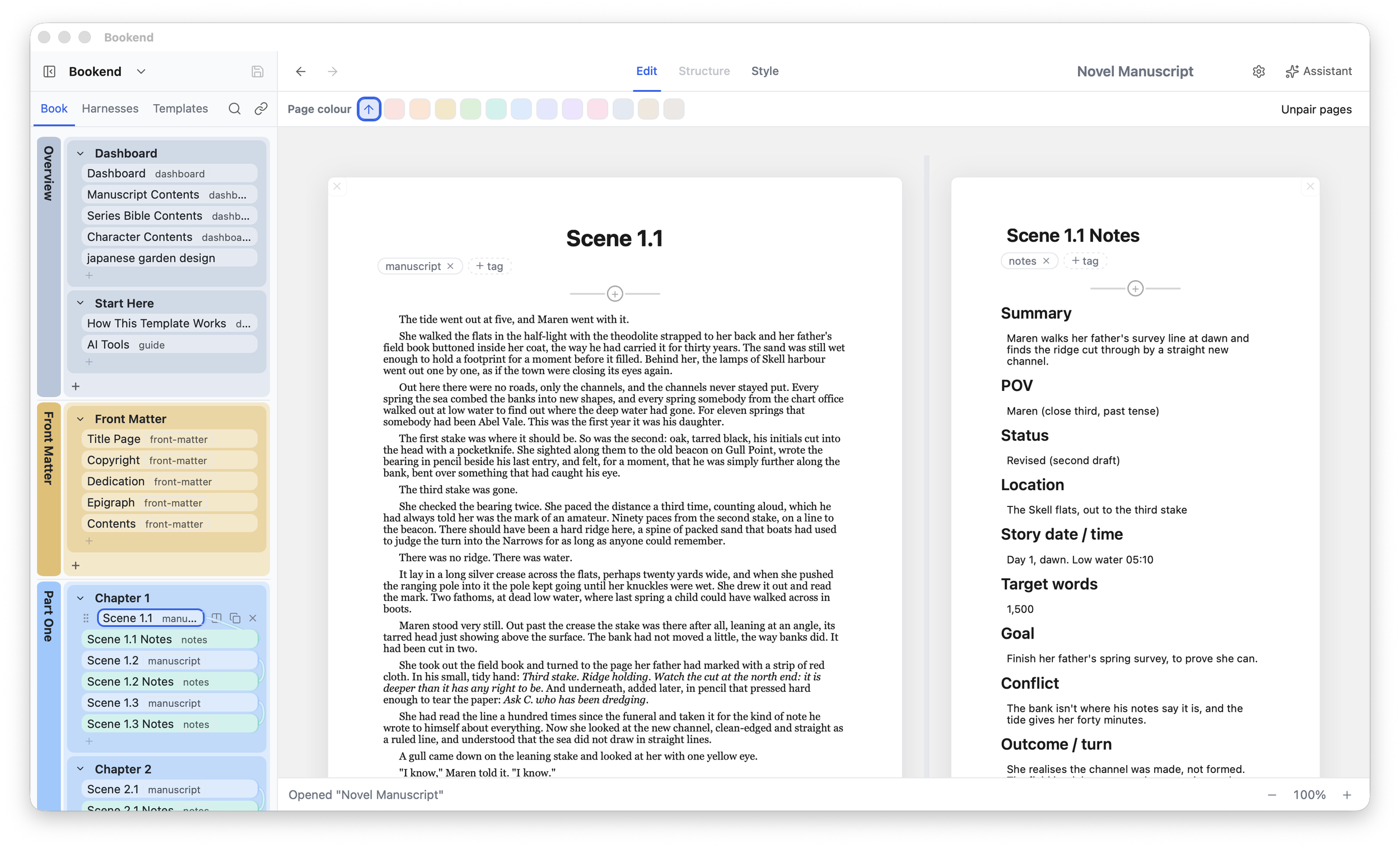
A notebook not a filing cabinet
Bookend is built around books, pages and Blocks.
That structure is simple enough for a few pages of notes, but scales naturally into textbooks, research collections, project documentation, personal wikis and sprawling archives of accumulated human thought.
Start with a page. Give it some neighbours. Let the structure grow with the work.
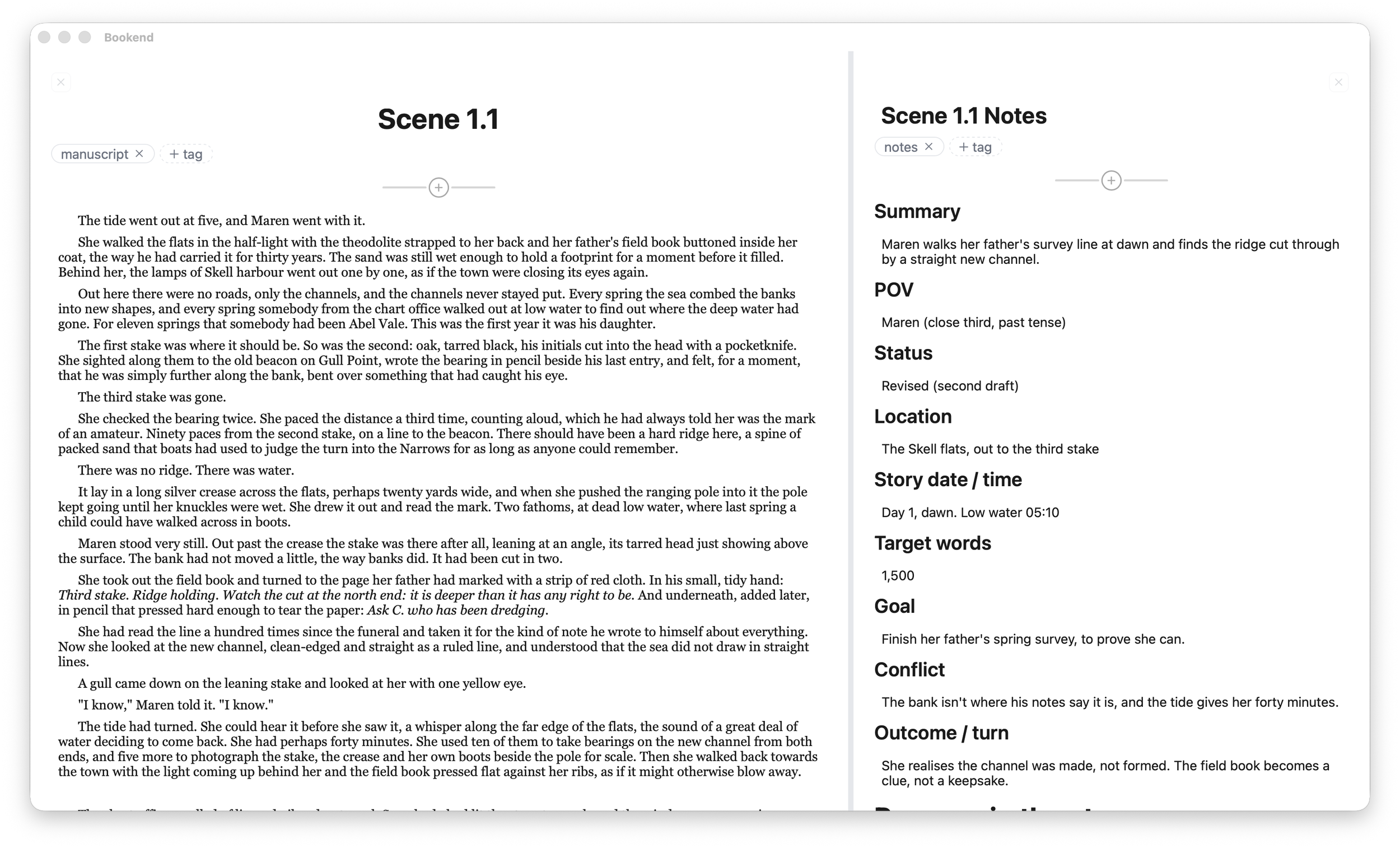
Write without fighting the editor
At its core, Bookend is still a place to write. Text, headings, lists, quotations, tables, images and other content live together as Blocks on the page. Rearrange them when the structure changes. Build reusable page templates when it doesn’t.
And when you don’t need any of that machinery, hide it.
Concentration Mode
Navigation disappears. Toolbars disappear. The page takes over the screen and follows your writing with typewriter scrolling.
Sometimes the best productivity feature is making the productivity features go away.

Make connections not duplicates
Knowledge rarely fits neatly into a folder tree.
Bookend lets pages link naturally to other pages, so a concept can belong to a chapter and still connect to ideas elsewhere.
Follow connections through your books. Build comparison pages. Reference related ideas instead of copying the same material into five different places and trying to keep them all up to date.
Your hierarchy gives your collection structure. Your links give it a memory.

Pages can do more than sit there
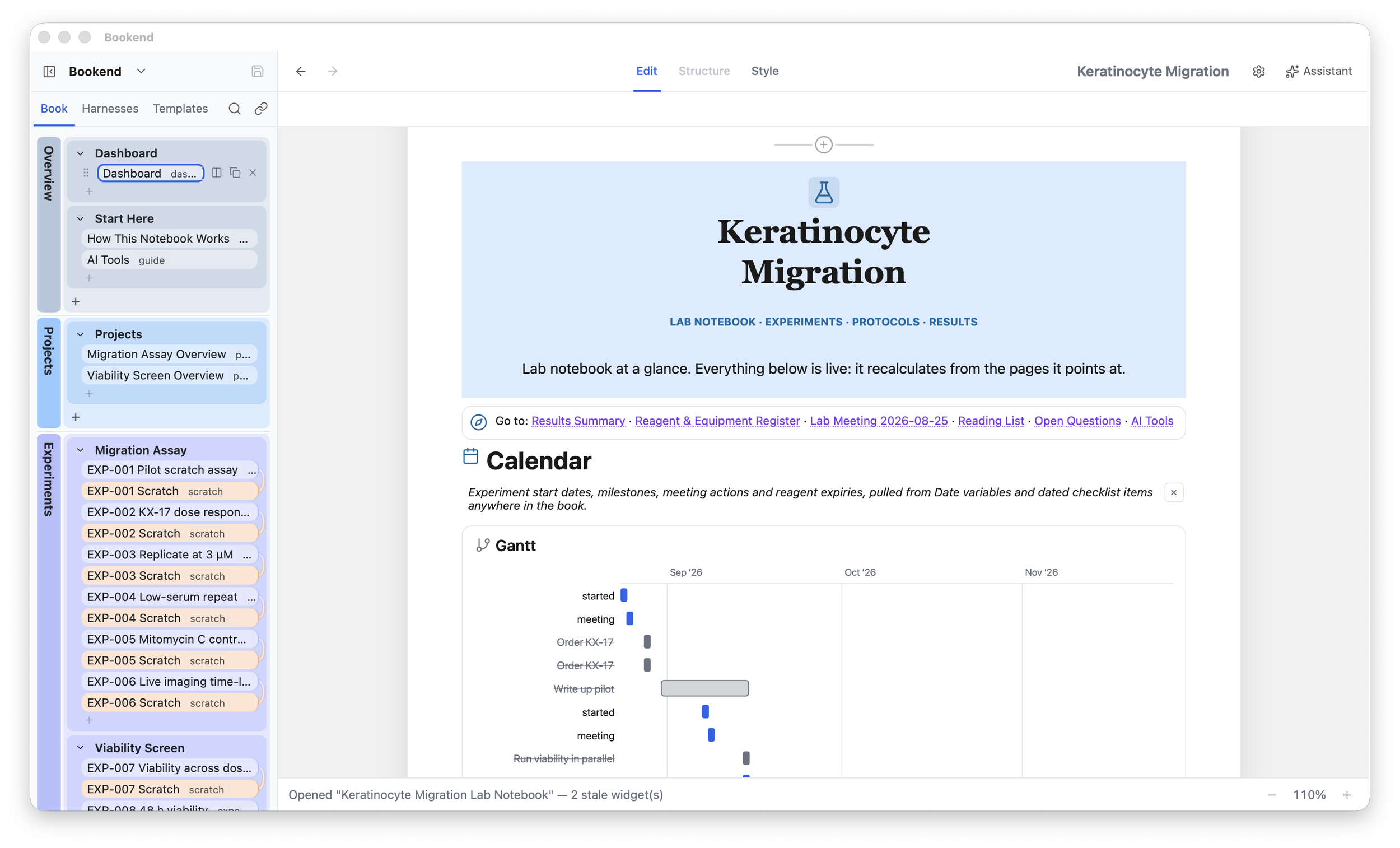
A Bookend page doesn’t have to be a stack of text. It can contain interactive Blocks: structured tools designed for the material you’re working with.
A Block might be a chart, a timeline, a calculator, a specialised reference tool or something made specifically for your own workflow.
Blocks and templates can be reused across a book, so useful structures become part of the notebook rather than something you rebuild every time.
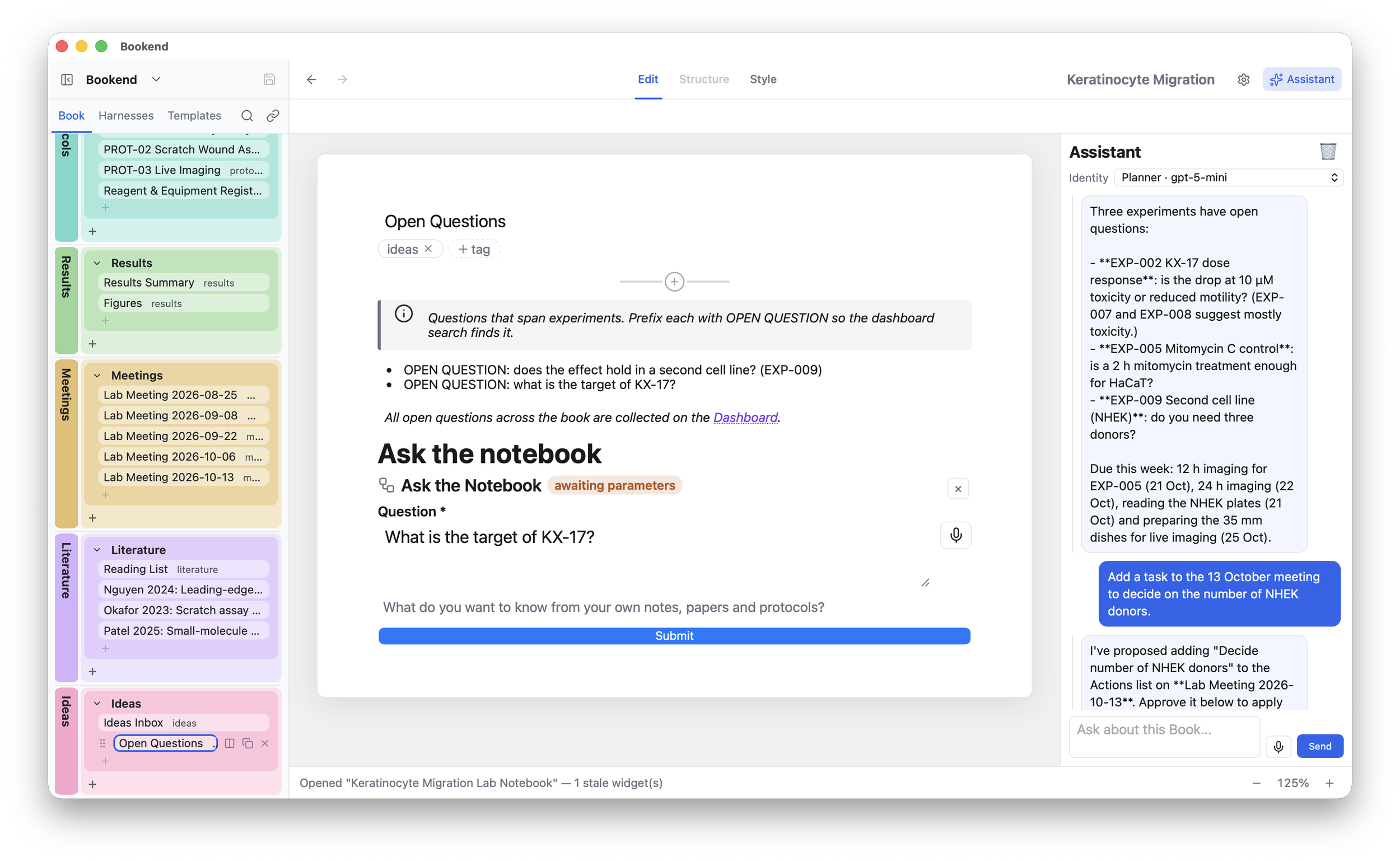
AI when you want it
Bookend works as a notebook whether you use AI or not.
When it is useful, AI can help you research, organise, transform, summarise or build something new. When you want to write and think for yourself, simply carry on.
AI-generated content can become ordinary content on the page, or remain as a reusable AI Block that you can run again later. Bookend can keep track of what that output depended on, so changes don’t have to mean regenerating an entire document.
Bookend is designed around selectable AI endpoints, giving you a choice of provider rather than tying your workflow to one.
Your notebook is the product. AI is one of its optional tools.
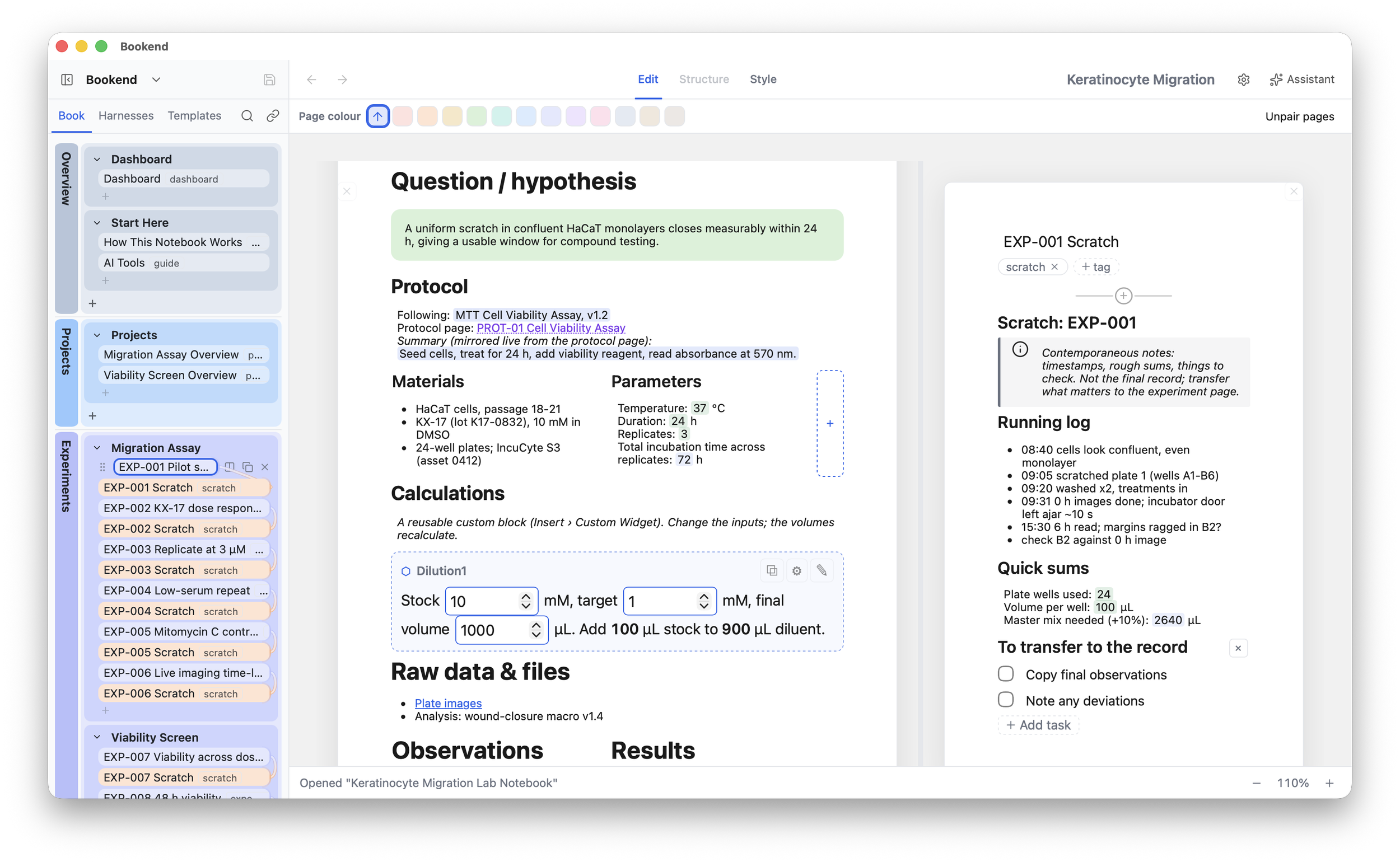
Build your own tools
Not every useful workflow needs to become a feature hard-coded into the application.
Bookend is designed so that templates and Blocks can be created for particular kinds of work, including Blocks with optional AI components.
A researcher might build a structured literature-review page. A student might create an interactive revision tool. A clinician might build a reference calculator. A writer might create a character or scene template.
Someone, inevitably, will build an elaborate system for ranking coffee beans.
Bookend shouldn’t need to anticipate every way people might use it. It should give them good pieces to build with.

Local first means local first
Your books live on your device.
Your writing and locally stored collection remain available whether the internet is fast, slow or currently being held together by an airport Wi-Fi login page. Optional online tools, including remote AI services, connect when you choose to use them.
Local files also mean you decide how your books are stored, backed up and synchronised. Use the tools you trust, and keep your collection where it suits you.

One collection across different devices
A serious notebook should come with you when you leave your desk.
Bookend is being built as a cross-platform application with a shared document format at its centre. It is available now for Mac. iPad and iPhone versions are awaiting App Store approval, and Android and Linux versions are in active development.
Start something at a desk. Read it on a tablet. Add a note from your phone. Open the same book on another computer.
The interface can change to fit the device. The book remains the book.
Designed for long lived knowledge
Bookend is being built for what happens after you’ve been taking notes for ten years.
A useful knowledge base grows. Its structure changes. Its topics overlap. Old notes acquire new meaning, and new tools suggest different ways to work with them.
Your content should be able to move with those changes, independently of the book that first brought it together.
Bookend won’t solve the problem of having too many ideas. But it can give them somewhere durable to live.

Build something worth keeping in Bookend
A notebook should help you think. It should get more useful as it grows. And the knowledge you build should remain yours, wherever you take it next.
Local books. Connected ideas. Tools you can make your own. Optional AI when it helps.